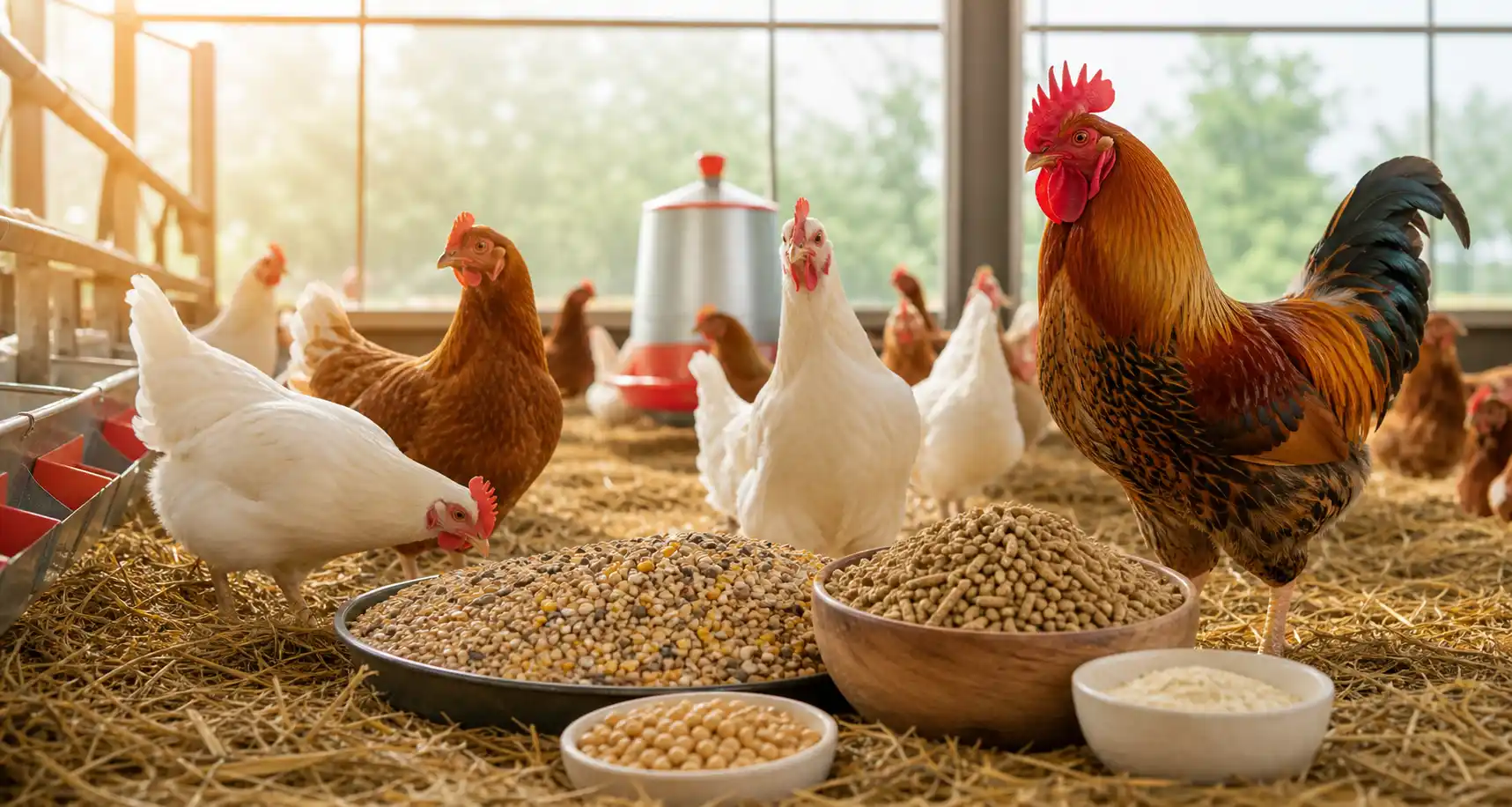
Feed Additives and Supplements for Poultry: Complete Overview
The world of poultry feed additives can be confusing. With hundreds of products on the market making various claims, separating the essential from the optional is critical. This article provides a complete overview of the categories and what I’ve found to be worth using after years of field experience.
Classification by Function
Feed additives fall into five functional categories:
Nutritional additives provide nutrients directly. Examples: vitamins, minerals, amino acids. These are essential additions to any complete feed.
Sensory additives improve the appearance or taste of feed. Examples: flavors, colors, sweeteners. These are optional but can be useful in specific situations.
Zootechnical additives improve animal performance. Examples: enzymes, probiotics, prebiotics, organic acids. These are increasingly important in modern production.
Coccidiostats and histomonostats control parasites. These are veterinary products in many countries.
Technological additives improve feed manufacturing or storage. Examples: binders, antioxidants, preservatives, emulsifiers.
Which Additives I Actually Use
After years of testing and trialing, here is what I currently use and why:
Phytase. Every diet, every species, every phase. The cost savings from reduced phosphorus supplementation alone justify it, and the environmental benefit is significant.
Xylanase. Every corn/soy or wheat diet. I use xylanase at 100-200 g/ton. The improvement in energy utilization pays for the enzyme 3-5 times over.
Protease. Selected diets, particularly when using lower-cost protein sources. Protease improves amino acid digestibility by 3-5%.
Probiotic (Bacillus subtilis). Antibiotic-free production and selected conventional programs. I use it at 500 g/ton for gut health support.
Acidifier (organic acids). In starter feeds and during disease challenge. I use a blend of formic and propionic acid at 2-4 kg/ton.
Vitamin-mineral premix. Every diet. The quality of the premix determines the foundation of the bird’s nutrition.
Mold inhibitor. In warm, humid conditions. I use a propionic acid-based inhibitor at 0.5-1.0 kg/ton during summer months.
Mycotoxin binder. When using high-risk ingredients (DDGS, wheat screenings, or during wet harvest years). I use a broad-spectrum binder at 1-2 kg/ton.
Fat antioxidant. When using added fat, particularly in high-PUFA diets. Ethoxyquin or natural alternatives protect the fat and the fat-soluble vitamins.
Additives I Don’t Use
Not every additive makes the cut. Here are some that I have tested and stopped using:
Enzymes beyond phytase/xylanase/protease. Beta-glucanase, mannanase, and others have more limited application. I use them only in specific diet formulations where they are needed.
Rare earth elements. Despite marketing claims, I have not seen consistent performance responses in my trials.
Homeopathic preparations. I have never seen a response that could be distinguished from placebo.
Additive Economics
The cost of additives must be justified by return. My rule of thumb:
| Additive Category | Cost/Ton | Expected Return/Ton | Verdict |
|---|---|---|---|
| Phytase | $0.50-0.80 | $1.50-3.00 | Essential |
| Xylanase | $0.80-1.50 | $2.50-5.00 | Essential |
| Probiotic | $4-8 | $8-20 | Recommended |
| Organic acids | $3-6 | $6-12 | Recommended |
| Mold inhibitor | $1-3 | $5-15 | Seasonal |
| Mycotoxin binder | $2-5 | $10-30+ | Risk-dependent |
| Flavoring agent | $1-3 | $2-5 | Optional |
| Pigment | $2-5 | Market-dependent | Market-driven |
Additive Interactions
Additives can interact with each other. Some combinations are synergistic (the effect is greater than the sum). Others are antagonistic (they reduce each other’s effectiveness).
Positive interactions:
- Probiotic + organic acid (combined gut health benefit)
- Phytase + vitamin D3 (improved phosphorus absorption)
- Vitamin E + selenium (antioxidant synergy)
Negative interactions:
- High copper + vitamin E (copper can oxidize vitamin E)
- Probiotics + high heat (pelleting kills some probiotics)
- Choline + other vitamins (choline destroys vitamins in premixes)
I consider these interactions in every formulation. A good nutritionist does not just pile additives on top of each other. They design a coherent program.
Additive Delivery
The carrier matters. Some additives are diluted on carriers like ground corn cobs, wheat middlings, or calcium carbonate. The carrier should be:
- Compatible with the additive (no chemical reactions)
- Free flowing (for consistent mixing)
- Stable (no mold growth)
- Appropriate particle size (similar to the rest of the feed)
Quality Verification
I verify additive quality through:
- Certificate of analysis for every batch
- Third-party testing annally for key additives
- In-feed recovery testing when I suspect a problem
- Visual inspection of all additives on delivery
If a supplier cannot provide consistent quality data, I find a new supplier.
The Big Picture
Feed additives are tools in a toolbox. The best program uses the minimum number of additives to achieve the desired performance. Every additive added to the feed should have a clear purpose and a measurable expected return. If it doesn’t, it doesn’t belong.
A good additive program:
- Starts with enzymes (phytase + carbohydrase)
- Adds targeted gut health support (probiotic or organic acid as needed)
- Includes a quality vitamin-mineral premix
- Adds condition-specific additives as needed (mold inhibitors, mycotoxin binders)
- Removes additives that are not delivering value
Keep it simple. Measure the response. Adjust as needed.