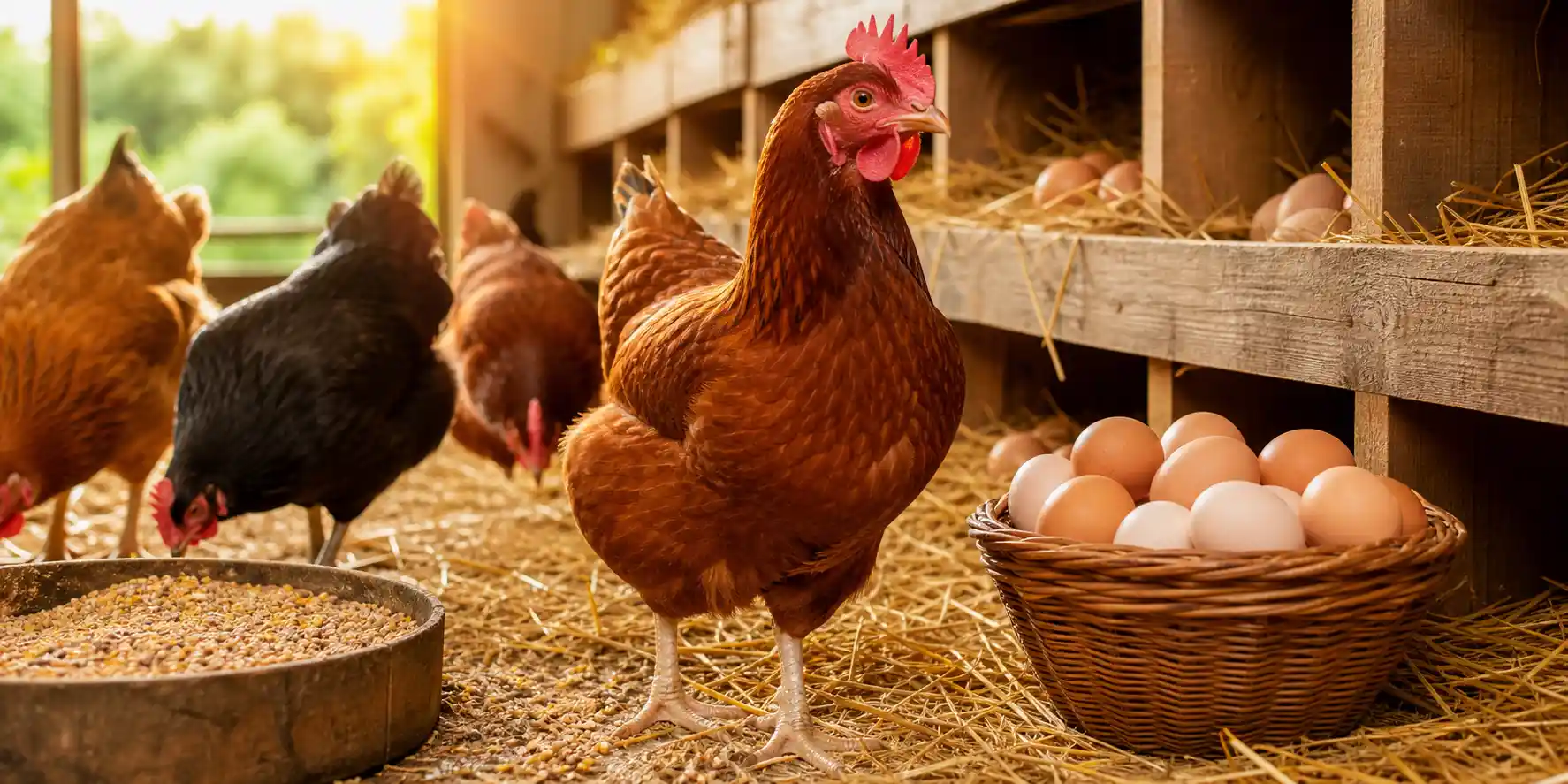
Egg Production Supplements: Boosting Layer Performance Naturally
Keeping a laying flock at peak production for 60-80 weeks is a significant nutritional challenge. The modern laying hen produces over 300 eggs per cycle, each requiring specific nutrients. When the diet doesn’t supply them, the hen pulls from her body reserves until those run out.
The Nutrient Demand of an Egg
Each egg contains roughly:
- 6-7 grams of protein (3.5 g in the albumen, 2.5 g in the yolk, 0.5 g in the shell membrane)
- 300 mg of calcium (in the shell)
- 1.5-2.0 mg of iron
- 0.5-0.7 mg of zinc
- 0.05 mg of copper
- 300 IU of vitamin A
- 30 IU of vitamin D3
Over a full laying cycle, a hen deposits about 2 kg of protein, 90 grams of calcium, and significant amounts of trace minerals into her eggs. The feed must supply all of this plus what she needs for maintenance and body condition.
Key Supplements for Egg Production
Calcium and vitamin D3 are the foundation. The hen needs 3.5-4.5 grams of calcium daily at peak production. I use a 50:50 blend of fine and coarse limestone plus oyster shell to ensure nighttime calcium availability. Vitamin D3 at 3,000-4,000 IU/kg supports calcium absorption.
Methionine is the first limiting amino acid for egg production. Each egg contains about 190 mg of methionine. The hen’s daily methionine requirement at peak production is about 400 mg for maintenance plus 190 mg for the egg = 590 mg total. The feed must supply this. I formulate layer feeds at 0.38-0.42% methionine during peak production.
Linoleic acid is an essential fatty acid for egg size. The diet should contain 1-2% linoleic acid from vegetable oils. In my experience, increasing linoleic acid from 0.8% to 1.5% can increase egg size by 2-3% within 2-3 weeks.
Carotenoids affect yolk color, which is a market quality factor. Yolk color is scored on a 1-15 Roche scale. Most markets want 10-12. I use canthaxanthin (2-4 ppm) and apo-ester (4-8 ppm) to achieve this. Natural sources like marigold extract and capsicum work but are less cost-effective.
Vitamin E (30-50 IU/kg) and selenium (0.3 ppm) support egg quality and extend the shelf life of table eggs. Vitamin E also transfers to the yolk and benefits consumer health a marketing point in premium egg programs.
Phased Feeding Programs
I adjust layer feed formulations through the production cycle:
| Phase | Weeks | Ca % | Avail P % | Methionine % | CP % |
|---|---|---|---|---|---|
| Pre-lay | 16-18 | 2.0-2.5 | 0.40 | 0.38 | 16.5 |
| Peak | 25-45 | 3.8-4.2 | 0.42 | 0.42 | 17.5 |
| Mid | 46-65 | 3.9-4.3 | 0.38 | 0.38 | 16.5 |
| Late | 66+ | 4.0-4.5 | 0.35 | 0.36 | 15.5 |
The pre-lay phase is often overlooked but is critical. The hen’s medullary bone must be mineralized before egg production starts. If she begins laying with poor bone reserves, shell quality will decline early in the cycle.
Layer Performance Markers
I monitor three key performance markers in layer flocks:
Egg weight. Should increase by 1-2% per month through peak. If egg weight plateaus before 40 weeks, check methionine and linoleic acid.
Shell breaking strength. Target: >3.5 kg force. Below 3.0 kg indicates a calcium, phosphorus, or vitamin D3 problem.
Haugh units. A measure of albumen quality. Fresh eggs should have >80 Haugh units below 70 indicates age-related decline or protein deficiency.
Practical Tips
- Egg size responds to linoleic acid within 2-3 weeks, not days. Plan changes ahead of market shifts.
- Shell quality declines with bird age. Starting at 50 weeks, increase calcium by 0.1% every 10 weeks.
- Water intake for layers averages 200-250 ml per hen per day. If intake drops, feed intake and production soon follow.
- Feed intake varies with temperature. A layer eats about 110-120 g/day at 20°C but only 90-100 g/day at 30°C. Adjust nutrient density accordingly.
Getting layer nutrition right is about consistency and attention to the changing needs of the hen through the production cycle. The right supplements, delivered at the right time, keep production high and health problems low.