Poultry Dietary Supplements: Understanding the Different Forms
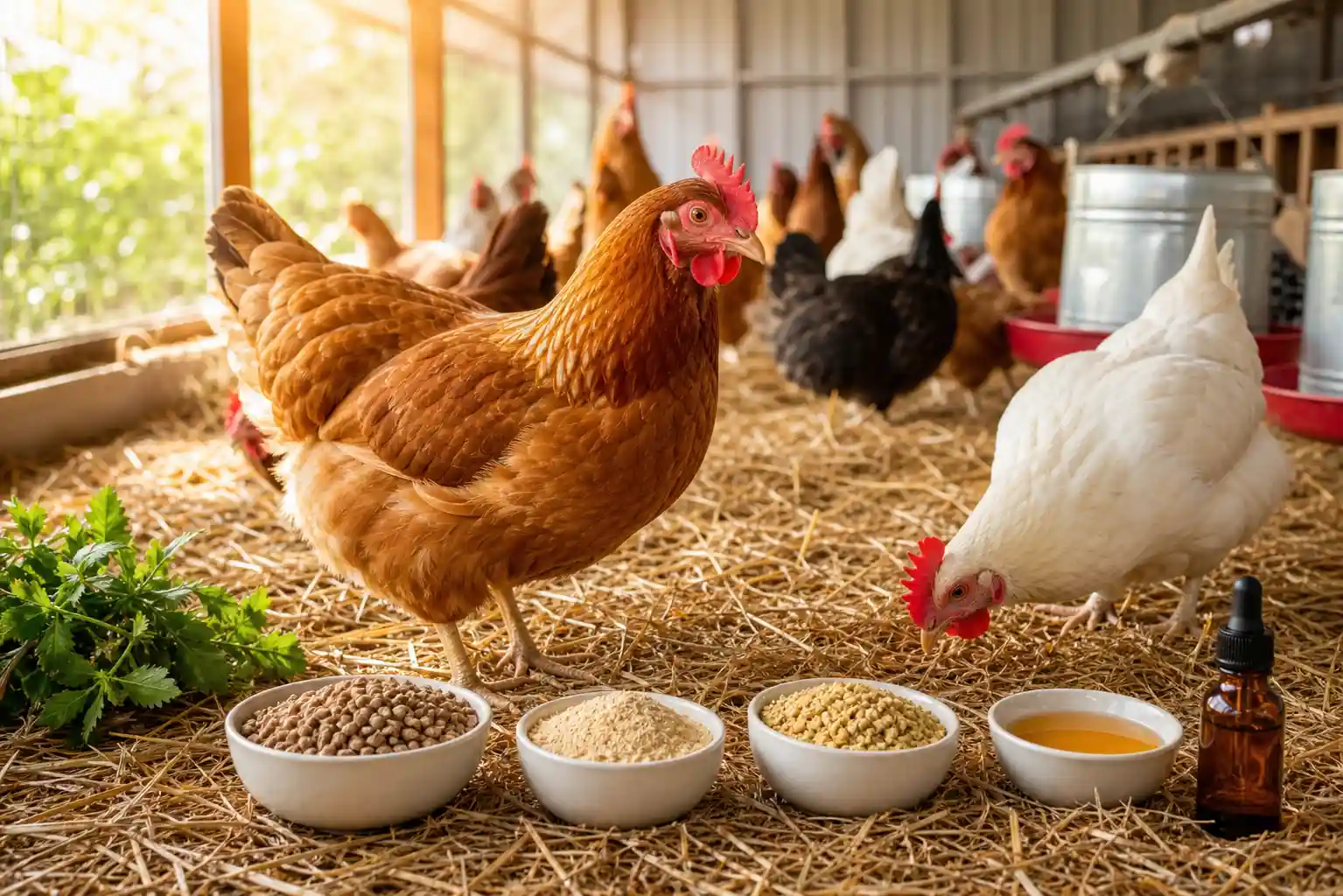
The poultry supplement market offers products in many forms: powders, liquids, pellets, blocks, pastes, and injectables. Each form has advantages and disadvantages. Choosing the right form for the situation is as important as choosing the right nutrient.
Feed-Added Powders
Powders are the most common form of poultry supplement. They’re mixed into the complete feed during manufacturing.
Advantages:
- Best distribution throughout the feed
- Lowest cost per unit of nutrient
- Consistent intake (every bite contains the supplement)
- Long shelf life if packaged correctly
Disadvantages:
- Requires feed mill equipment for proper mixing
- Particle size segregation can occur during handling
- Some powders are dusty and unpleasant to handle
- Pelleting can degrade heat-sensitive nutrients
Best for: Routine supplementation of large flocks, complete feed programs, cost-sensitive operations.
Water-Soluble Concentrates
Liquid supplements are designed for administration through the drinking water.
Advantages:
- Rapid absorption
- Reaches sick birds that are not eating
- Precise dosing through medicators
- Flexible administration (can be used for short periods)
Disadvantages:
- Expensive per unit of nutrient
- Limited concentration (only so much can dissolve)
- Water intake variable (not every bird drinks the same amount)
- Line cleaning required after use
- Shorter shelf life once mixed with water (use within 24 hours)
Best for: Therapeutic use, stress periods, disease recovery, small flocks without feed mixing capability.
Pellets and Crumbles
Pelleted supplements are ingredients that have been compressed into pellet form.
Advantages:
- No segregation during handling
- Good for top-dressing (adding on top of feed)
- Less dusty than powders
- Easy handling
Disadvantages:
- Heat during pelleting degrades some vitamins
- Additional cost of pelleting ($5-15 per ton extra)
- Less flexible for small quantities
Best for: Complete compound feeds, operations with pellet mills.
Block Supplements
Supplement blocks (salt blocks, mineral blocks, protein blocks) are designed for free-choice feeding.
Advantages:
- Self-limiting intake (birds consume only what they need)
- No mixing equipment required
- Good for pasture or free-range operations
- Long shelf life
Disadvantages:
- Intake varies by bird
- Weather exposure can degrade blocks
- Not suitable for precise supplementation
- Some birds may not use them
Best for: Pasture flocks, small homesteads, situations where precise dosing is not critical.
Paste and Gel Supplements
Concentrated pastes or gels are administered orally, often with a syringe-type applicator.
Advantages:
- Guaranteed individual dosing
- Immediate effect (bypasses the digestive tract partially)
- Useful for individual sick or weak birds
- No competition (the targeted bird gets the full dose)
Disadvantages:
- Labor intensive (must handle each bird)
- Stressful for the bird
- Expensive per treatment
- Not practical for large flocks
Best for: Individual treatment of show birds, pet chickens, or valuable breeding stock.
Injectable Supplements
Vitamin and mineral injections are used for individual treatment.
Advantages:
- Immediate absorption
- Bypasses digestive issues
- Useful in severe deficiency cases
Disadvantages:
- Veterinary supervision often required
- Risk of injection site reactions
- Labor intensive
- Costly
Best for: Severe deficiency treatment, veterinary-directed therapy.
Matching Form to Situation
| Situation | Recommended Form | Why |
|---|---|---|
| Routine broiler production | Feed powder/pellet | Lowest cost, consistent intake |
| Disease outbreak | Water soluble | Reaches sick birds |
| Heat stress | Water soluble | Birds drink more when hot |
| Small backyard flock | Water soluble or block | Easy, no equipment needed |
| Individual sick bird | Paste or injectable | Guaranteed dosing |
| Pasture layers | Block | Self-limiting, weather-tolerant |
Quality Indicators Regardless of Form
For any supplement form, I evaluate:
- Label transparency. The label should state specific ingredient levels, not “proprietary blend” or “proprietary formula.”
- Manufacturing date. Fresher is better. Ask for the manufacture date.
- Expiration date. Products should be used within their stated shelf life.
- Third-party testing. Independent verification adds confidence.
- Supplier reputation. Products from established manufacturers are more trustworthy.
The form of the supplement matters. But the quality of the ingredients and the accuracy of the label matter more. Choose the form that fits your operation and the product that meets your quality standards.