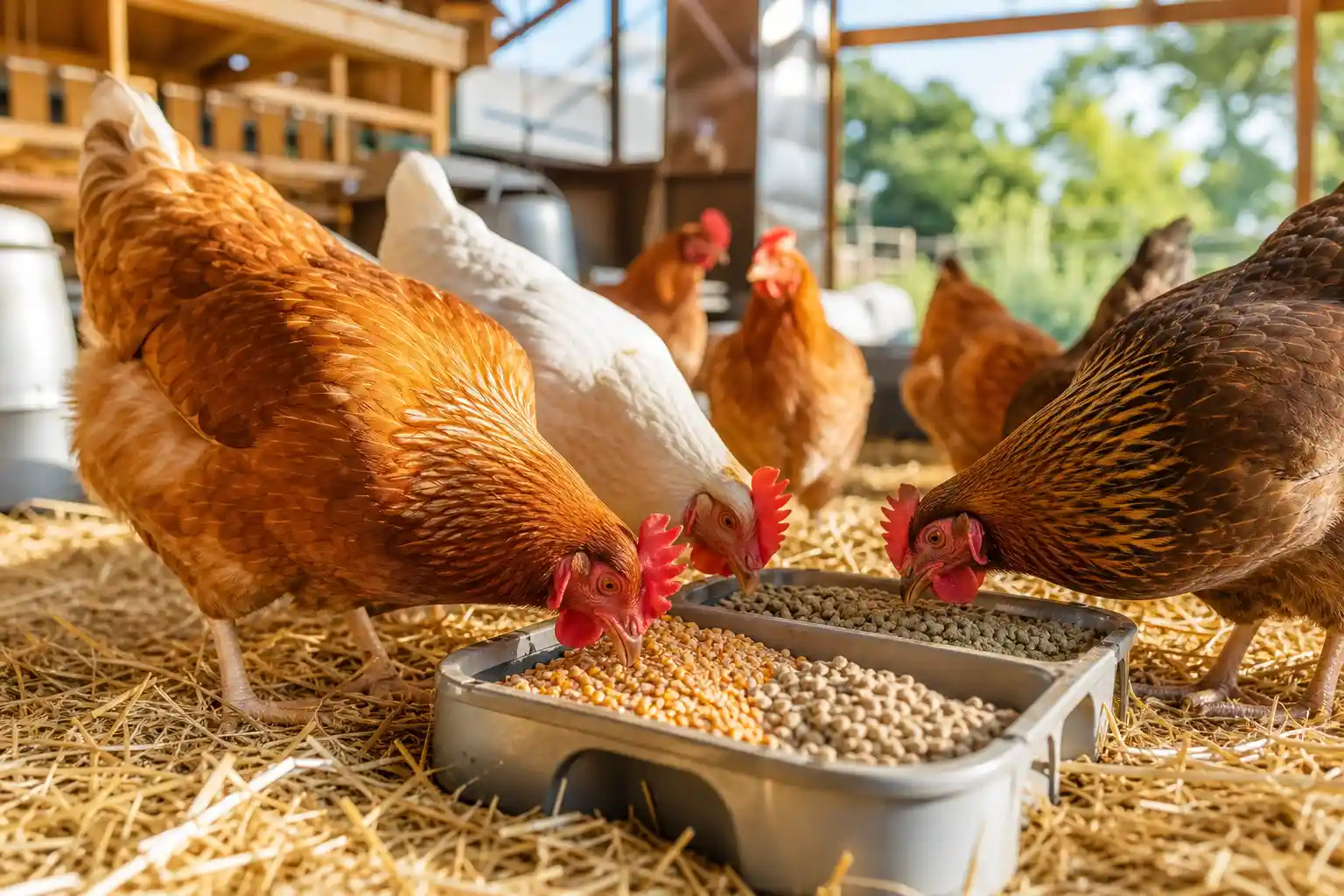
What Is Poultry Feed Supplement: A Beginner’s Guide
If you’re new to poultry keeping, the world of feed supplements can be overwhelming. Shelves full of products, complicated labels, and conflicting advice from online forums make it hard to know what your birds actually need.
The Simple Definition
A poultry feed supplement is any product added to the bird’s diet that provides nutrients or benefits not supplied by the base feed. Supplements are intended to correct deficiencies, support health, or improve performance.
The key word is “supplement.” It means adding to something that is already there, not replacing it. A supplement is not a substitute for a complete, balanced feed.
Do Your Birds Need Supplements
This depends on what you’re feeding them:
If you’re feeding a complete commercial feed (labeled as “complete layer feed” or “complete broiler feed”), the feed already contains all the vitamins and minerals a healthy bird needs. The primary supplement to consider is oyster shell for laying hens (for extra calcium) and grit for birds that forage.
If you’re mixing your own feed from grains and protein sources, you will need a vitamin-mineral premix to ensure the diet is complete.
If your birds are under stress (heat, disease, transport, showing), supplements like electrolytes and vitamins support the bird’s natural coping mechanisms.
If your birds have a specific health issue, targeted supplements can help address that issue.
Types of Supplements
Supplements fall into a few broad categories:
Vitamin supplements. Provide vitamins A, D3, E, K, C, and the B-complex group. Used for general health, stress support, and growth.
Mineral supplements. Provide calcium, phosphorus, zinc, selenium, copper, iron, and other minerals. Calcium (oyster shell) is the most common mineral supplement.
Probiotics. Live beneficial bacteria that support gut health. Increasingly common in poultry feeds.
Electrolytes. Sodium, potassium, and chloride for fluid balance and stress support.
Amino acids. Methionine and lysine are the most common. Most complete feeds already contain adequate levels.
Herbal or botanical supplements. Oregano oil, garlic, and other plant extracts with purported health benefits. Evidence varies.
How Supplements Are Given
Supplements come in several forms:
| Form | How It’s Used | Best For |
|---|---|---|
| Powder | Mixed into feed | Routine supplementation |
| Liquid | Added to drinking water | Sick birds, stress periods |
| Block | Birds consume free-choice | Pasture flocks, small operations |
| Paste | Given orally | Individual sick birds |
What to Look For on a Label
A quality supplement label should tell you:
- The specific ingredients and their levels (not just “proprietary blend”)
- The species and age of birds it’s intended for
- Directions for use (how much, how often, how to administer)
- Storage instructions
- Manufacturer information
- Lot number and expiration date
If a label does not provide specific nutrient levels, I would be cautious about buying that product.
Common Beginner Mistakes
1. Over-supplementing. More is not better. Extra calcium can harm growing birds. Excess vitamins are wasteful.
2. Using the wrong form. Water-soluble supplements are for water, feed supplements are for feed. They are not interchangeable.
3. Expecting supplements to fix poor management. No supplement can replace clean water, good feed, proper ventilation, and biosecurity.
4. Not storing supplements properly. Heat and moisture destroy vitamins.
5. Buying based on testimonials rather than data. Just because it worked for someone online does not mean it will work for your birds.
The Starter Supplement Checklist
If you keep a small flock and are wondering what to buy, here is my minimal list:
- Oyster shell (for laying hens only)
- Grit (if birds do not have access to small stones)
- Water-soluble vitamin/electrolyte powder (for stress periods)
- A complete feed (this is the most important thing)
That is all most small flocks need. As you gain experience, you can add targeted supplements for specific situations.
Summary
Feed supplements are tools, not magic. Used correctly, they support health and performance. Used without understanding, they waste money and can cause problems. Start with a good complete feed, add targeted supplements when needed, and always read the label.