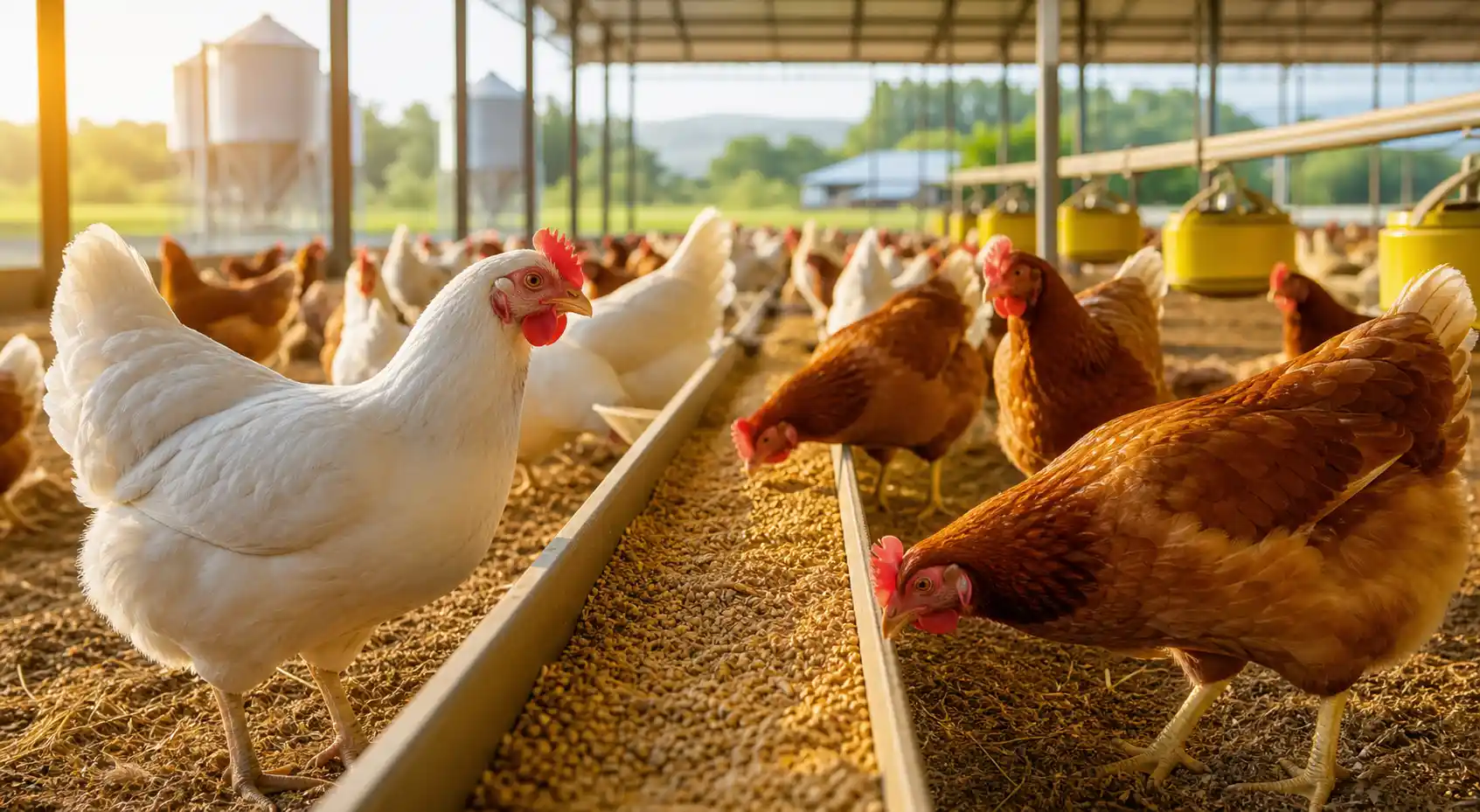
Poultry Feed Supplement Manufacturers in India: Market Overview
India’s poultry feed supplement market has grown significantly over the past decade. I’ve visited several manufacturing facilities across the country and have seen both world-class operations and basic facilities. The Indian market is unique in its scale, diversity, and regulatory environment.
Market Size and Growth
The Indian poultry feed supplement market is estimated at approximately $400-500 million annually, growing at 8-10% per year. This growth is driven by:
- Increasing poultry consumption (per capita egg consumption has doubled in the past 15 years)
- Growth of organized poultry production (integrators now account for 40-50% of production)
- Rising awareness of feed quality and supplementation
- Government support through poultry development programs
Major Manufacturing Regions
Poultry feed supplement manufacturing in India is concentrated in several regions:
Andhra Pradesh and Telangana account for approximately 30-35% of poultry feed supplement production. The region has a high concentration of poultry farms and good infrastructure for raw material import.
Tamil Nadu produces 15-20% of the country’s poultry feed supplements. The region has several large manufacturers and good port access.
Maharashtra and Gujarat produce about 20% of the total. These regions have a well-developed chemical industry that supplies raw materials.
Karnataka and Kerala together produce about 10-15%.
North India (Punjab, Haryana, Uttar Pradesh). The poultry industry in the north is growing fast, and supplement manufacturing is following.
Leading Manufacturers
The Indian market has a mix of multinational and domestic manufacturers:
Multinational: DSM India, BASF India, Adisseo, Kemin Industries, Alltech. These companies bring global technology and quality standards.
Large domestic: Venky’s, Phibro Animal Health (formerly NVS), Indian Immunologicals, Hester Biosciences. These companies have extensive distribution networks.
Regional manufacturers: Hundreds of smaller manufacturers serve local markets. Quality varies widely.
Regulatory Framework
Poultry feed supplements in India are regulated by:
- Bureau of Indian Standards (BIS). Sets standards for feed ingredients and supplements.
- Food Safety and Standards Authority of India (FSSAI). Increasingly involved in feed regulation.
- Drugs and Cosmetics Act. Regulates certain feed additives classified as drugs.
- Export Inspection Council. For manufacturers exporting supplements.
The regulatory environment is evolving. New standards for feed additives were introduced in 2021, and enforcement is increasing. Manufacturers that comply with these standards will have a competitive advantage.
Raw Material Supply
India’s supplement manufacturers face challenges in raw material supply:
- Vitamins. Most vitamins are imported from China (60-70%) and Europe (20-30%). Domestic vitamin production is limited.
- Trace minerals. Most are produced domestically from mineral deposits in Rajasthan and Gujarat.
- Amino acids. L-lysine and DL-methionine are primarily imported from China, Korea, and Europe.
- Carriers. Rice bran, wheat bran, and corn flour are available domestically.
The dependence on imported vitamins and amino acids makes the Indian market vulnerable to global price fluctuations and supply chain disruptions.
Quality Challenges
The Indian market has a quality gap between leading and basic manufacturers:
- Premium manufacturers: GMP certified, HACCP compliant, in-house QC labs, full batch records
- Mid-tier manufacturers: Some quality controls, basic testing
- Basic manufacturers: Minimal QC, inconsistent product quality
I recommend that poultry producers in India buy from manufacturers that can provide certificates of analysis and allow facility visits. The price premium of 10-20% over the cheapest option is worth the quality assurance.
Export Potential
India is becoming an exporter of poultry feed supplements:
- Primary export markets: Bangladesh, Nepal, Sri Lanka, Middle East, Africa
- Export value: approximately $50-80 million annually
- Growing demand for Indian products in price-sensitive markets
Indian manufacturers are competitive on price but need to improve documentation and quality certification to access higher-value markets.
Looking Forward
The Indian poultry feed supplement market will continue to grow. The trends I see:
- Consolidation of smaller manufacturers into larger groups
- Increased foreign investment in manufacturing capacity
- Growing demand for specialty supplements (probiotics, enzymes, organic forms)
- Tightening regulation that will raise quality standards
Manufacturers that invest in quality and compliance will thrive. Those that compete only on price will struggle as the market matures.